These drinks are made from “trash”
G’day folks, Tom Opie here. I’ve been slinging tins (bartending) for around 8 years now and my obsession with ingredient optimisation has grown with my years behind the stick.
Not only ingredient optimisation, but trying to create as minimal waste as possible. In hospitality, myriad of problems arise with the disposal of produce and recycling. Supply chains aren’t setup to support the amount of stuff we generate in hospitality. Households are also victim to this, with approximately 92% of food waste from houses going to landfill: I’m sure you can guess why that might be the case and it’s not always because people refuse to. Imagine if we could reduce this by 10%? Small things create monumental change.
Because of all of this I decided I’d take it upon myself, with this amazing opportunity to work for influential restaurants to establish a completely zero waste cocktail and non alcoholic program.
Below is an exploration of many years of practice, love and eyes glued to books. Those books will be referenced frequently, if you like this content, let me know or come in and experience our pairing, I think it’s pretty special.
KOJI AND FERMENTATION
Rewind around 6 years to the pandemic, lockdown. I’d wake up, go to the gym and then read for hours and hours. I’d sit inside our bar Births and Deaths in Wollongong all day by myself, reading Ferment by Holly Davis that my friend Maz gave me. After Ferment it was Ferment for Good by .. and the one everyone has seen but barely anyone has actually read (maybe because it’s double the size of a Tolkien epic) The Noma Guide to Fermentation, maybe the magnum opus of gastronomic cooking.
It was the first time I gazed upon koji, this wonderful ancient mould that is responsible for the best things in life: miso, soy sauce and sake. Bewildered, excited and extremely confused I began to experiment: drilling holes in an esky I’d bought, fitting it neatly with heat sensors and a humidifier, I began the journey to koji mastery (and let’s be honest heaps of failure). No one ever masters koji, but that isn’t the point. When you wake one morning, sun’s shining, the cockatoos singing their not so serene symphony and through the squarks of mischief you take a deep breath through your nose and the first thing like technicolour, a redolence of mangoes, peaches and mushrooms fill the air. Yellows, greens, island tropicality and the liveliness of earth. I won’t ever forget it and not one person who has successfully made koji can.
Anyway, basically this mycellium; aspergillus oryzae turns the starches of rice to sugars, accompanied with the sight of glowing white mats. It’s truly an incredible transformation, like the best combo deal you’ve ever seen. Then, if you combine this Marianas trench of enzymes and good bacteria with a simple starch (rice) and water and cook it for 12 hours at 60 degrees, you get an EVEN SWEETER liquid known as amazake. Amazake is definitely in my top 5 things in the world: there are studies that suggest that the enzymes in amazake can help with chronic bowel conditions, which is awesome.
Amazake is the basis of a majority of ferments at Pilot and Such and Such.
POTATO TEA
Potato Tea is inspired by watching my parents peel a potato and throw the peels in the bin. I’d watch it, think it was normal until I was 21 and had potato peel chips at a beautiful cafe in Austinmer named “Earth Walker and Co” They were delicious, maybe even better than potatoes.
Chefs love operating like parents, they use what they need and dispose of what they do not. It’s a time crunch job, many mouths to feed and limited time to do it.
“Hey, what if I just learned to make drinks with the things the chefs don’t use? Then we wouldn’t need to dispose of stuff and I wouldn’t need to order stuff in: hence reducing the amount of waste we’re producing.”
Enter potato skins, I think I annoy the chefs maybe because every time they’re chopping something up I’ll walk up and eat a stem of a vegetable or a skin of a fruit etc. and I’ll say “can you keep that for me please?” ansd so it begins.
Potato skins, what are they? They are obviously a protective layer for the vegetable, full of cellulose an other polysaccharides. But the beauty of polysaccharides (multi chain carbohydrates) is we can render them edible, break down the protective layer and access sugars which are delicious.
Heat does this pretty well, so does nixtamalisation but we’ll get onto that another time.
If you’d like to know more about insoluble and soluble starches, DM me on Instagram or email.
These potato skins are soaked to get a lot of the dirt our and then heated, firstly slowly (this helps activate the amylases and allows us to access sugar) for 10 minutes and then hard. The indicator that this solution is ready is an aromatic of arrowroot or vanilla: because starches are being converted to sugars, aldehydes such as vanilla are a bi product. YAY, we now have sugar and the cellulose has been broken down, because for some reason this potato slop liquid is sweet (WHAAAAT).
We blend this with equal parts water as it cools and it yields something like a potato milk. Remember how we talked about amazake and said that rice is a starch and koji eats that good good stuff up and creates an incredible sweet drink?! Same thing happens here (lesss goo).
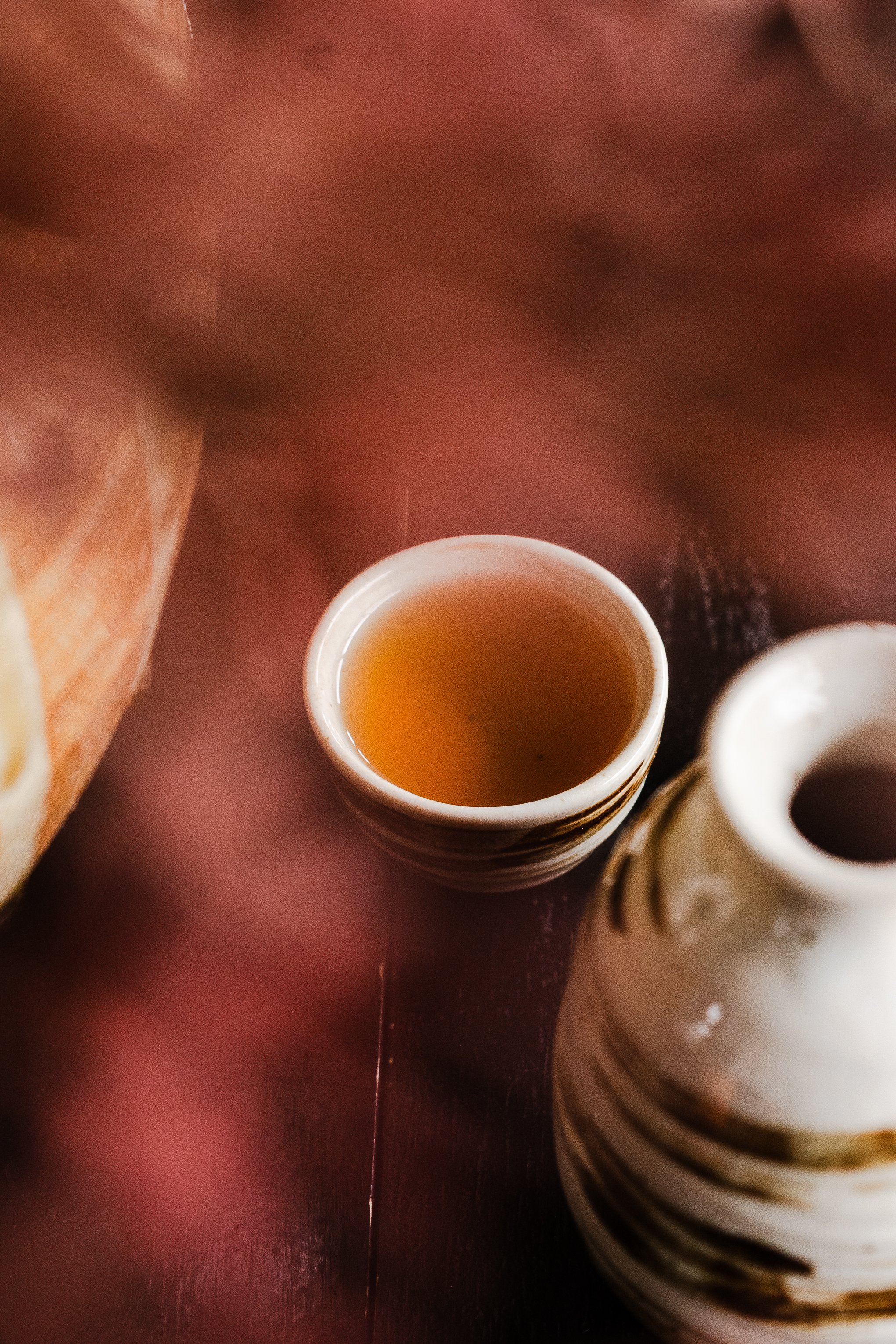
After fermentation, because arrowroot biscuits are aromatic and kind of essential with tea, this is diluted with a blend of peppermint and rose tea. The end product is caramelly, creamy, savoury and abundantly floral. It reminds me of walking into a secret garden, somewhere in England with a peppermint tea, arrowroot biscuit equipped.